


Sorting out how to access and drive your car is, unfortunately, far less simple than home door locks. Unless you drive a Tesla (covered below), some level of modification will always be necessary for your car to achieve a full key replacement using a chip implant.
- Traditionally keyed vehicles
Your standard keyed vehicle will usually have some sort of active fob system, either physically part of the key or as a separate device, which is used by pushbutton to lock and unlock your door and disarm the alarm.

This keyfob will typically need to be hacked in some way to properly manipulate the door locks and the alarm. In addition to the lock control fob, the physical key inserted into the ignition will likely also have an RFID transponder inside of it which is read by the car’s ECU to disengage the immobilizer. Without this transponder, if you had a key that could turn the ignition switch, the car would still not start. Hacking this ignition key transponder in some way will also likely need to be part of the solution.
Finally, the steering column typically requires a physical turn of a key to disengage the steering wheel lock itself so you can drive. These locks can be mechanically disengaged, but it requires complete disassembly of the steering column to get at this locking mechanism.
Getting these kinds of vehicles to work with chip implants is extremely involved and difficult. Essentially you have to completely disable all anti-theft measures put in place by the vehicle manufacturer and then hack the lock controls too. It’s seldom worth doing if you are not a car mechanic yourself.
- “Keyless” vehicle systems
This term is misleading because you still need a keyfob, but the point is that these systems use an active key fob device that constantly transmits.

When in range of the vehicle, the doors (and trunk or hatchback door) will engage small unlock buttons you can press to unlock just be walking up with the fob in your pocket. Likewise you can sit in the car with the fob in your pocket and simply press the start button.
On the plus side, you don’t have to hack your car at all to get this kind of system working with a chip implant. You only have to get a spare keyfob and hack that! There are several ways to go about this process, but the basic concept is that you will open the spare key fob and find where the battery connects to the key. You will create a switch for this battery using an RFID reader so that you scan your chip, the key fob gets power and the car “sees” the key fob is in range. Then all the door buttons will work and you can drive the car. When you scan your chip again, the key fob loses power and the car thinks the key fob has gone out of range.
Exactly how to do this has not been standardized or turned into a product yet, but there are people on this forum that have experimented with just such a project. If you are interested in exploring this option, post the make and model of your vehicle and indicate you’d like assistance hacking your key fob. You are certain to get help from our amazing community here in no time.
- Tesla keycard access
If you drive a Tesla model 3, model Y, or the new 2021+ models of the S or X (and hopefully Cybertruck, but we don’t know yet), then you should be able to access your car and drive away using a keycard.
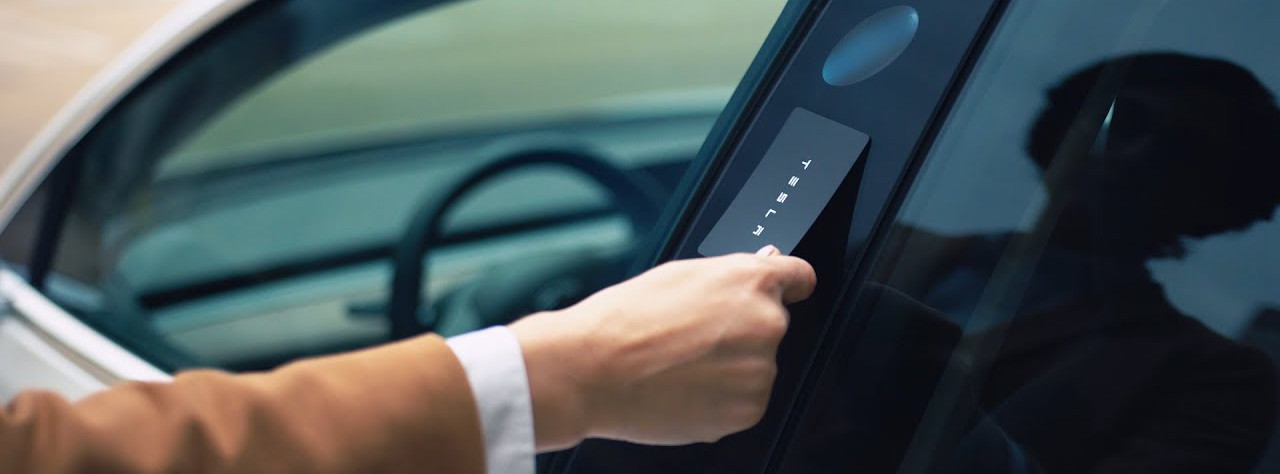
This is a special kind of passive RFID device called a Contactless Smart Card, or sometimes called a Contactless Secure Element. What that means is that the chip inside this card doesn’t just have a serial number and some memory for data storage, it is an actual small computer that can run software called Java Card applications. Lucky for us, the Tesla keycard runs such a Java Card application and it uses a special kind of encryption technology called public key encryption.
Also lucky for us, the application is extremely secure and cannot be hacked, however also does not utilize (at the time of this writing) any authorization signature. The short story is, while the key cards cannot be hacked to steal cars, you can register a non-Tesla RFID chip running the correct software with your car and it will appear to be a key card to the Tesla vehicle.
There is currently only one kind of implantable RFID chip that can do this, and it’s called the VivoKey Apex. There are a few different types of Apex products in development and those should be released by the time you read this. Here are some relevant links.